
The Difference Between Synchronous and Asynchronous Communication

The real tug-of-war in modern communication isn't about which tool is best—it's about timing. The core difference between synchronous and asynchronous communication is simple: synchronous communication is real-time interaction, like a video call, while asynchronous communication involves a time lag, like sending an email. Knowing when to pull each lever is what separates a chaotic team from a productive one, especially in today's flexible work environments.
Understanding Synchronous vs Asynchronous Communication
At its heart, the distinction boils down to one question: do we all need to be here, right now, for this conversation to happen? This single difference splits collaboration into two powerful, distinct streams that are vital for modern teams, particularly in education and corporate training.
Synchronous communication is all about that immediate, interactive spark. It demands everyone to be present and engaged at the same moment, creating a shared, live experience.
Practical Example: A quick 15-minute daily stand-up on a video call to resolve blockers for the day ahead.
Actionable Insight: Use this for urgent problem-solving or when emotional nuance is critical, such as in performance feedback.
On the flip side, asynchronous communication gives everyone breathing room. It champions flexibility and thoughtful, well-crafted responses because participants contribute on their own schedules.
Practical Example: Sharing a detailed project update via a shared document, where team members can add comments and feedback over several hours or even days.
Actionable Insight: Use this to protect your team's focus time. Instead of calling a meeting, try recording a short video explaining the task and share it for feedback.
Mastering both isn't about having the fanciest tools; it’s about strategically matching the method to the task's urgency, its complexity, and whether it requires deep, uninterrupted focus.
Key Differences at a Glance
To quickly see how these two methods stack up, here’s a breakdown of their fundamental distinctions.
Characteristic | Synchronous Communication | Asynchronous Communication |
|---|---|---|
Timing | Real-time, all participants present simultaneously | Delayed, participants respond on their own schedules |
Pace | Fast, immediate feedback and quick decision-making | Slower, allows for more thoughtful and detailed responses |
Interaction | Spontaneous, conversational, and often unplanned | Deliberate, structured, and typically well-documented |
Practical Example | A live Microsoft Teams lecture for a group discussion | A pre-recorded video lesson uploaded to a Moodle course |
Best For | Urgent problem-solving, team building, complex brainstorming | Deep work, detailed feedback, cross-time-zone updates |
This table lays out the core trade-offs, helping you decide which approach fits a particular situation.
Why This Matters for Modern Teams
In today’s world, the lines between the office, home, and classroom are blurrier than ever. Leaning too heavily on synchronous methods is a recipe for "meeting fatigue," where calendars are clogged with back-to-back calls that leave zero time for actual work. It’s no surprise that 55% of employees report spending more time at work due to poor internal communication.
A well-balanced communication strategy that blends both synchronous and asynchronous methods is no longer a luxury—it's essential for preventing burnout, respecting different work styles, and enabling true productivity.
But going fully asynchronous has its pitfalls, too. It can sometimes slow down critical decisions or make it tougher to build genuine team cohesion. The sweet spot is a hybrid approach. For instance, a team might kick off a project with a quick synchronous video call to get everyone aligned, then shift to an asynchronous project management tool for daily updates. This smart blend respects everyone's focus time while ensuring the project keeps moving forward.
The Case for Real-Time Synchronous Communication
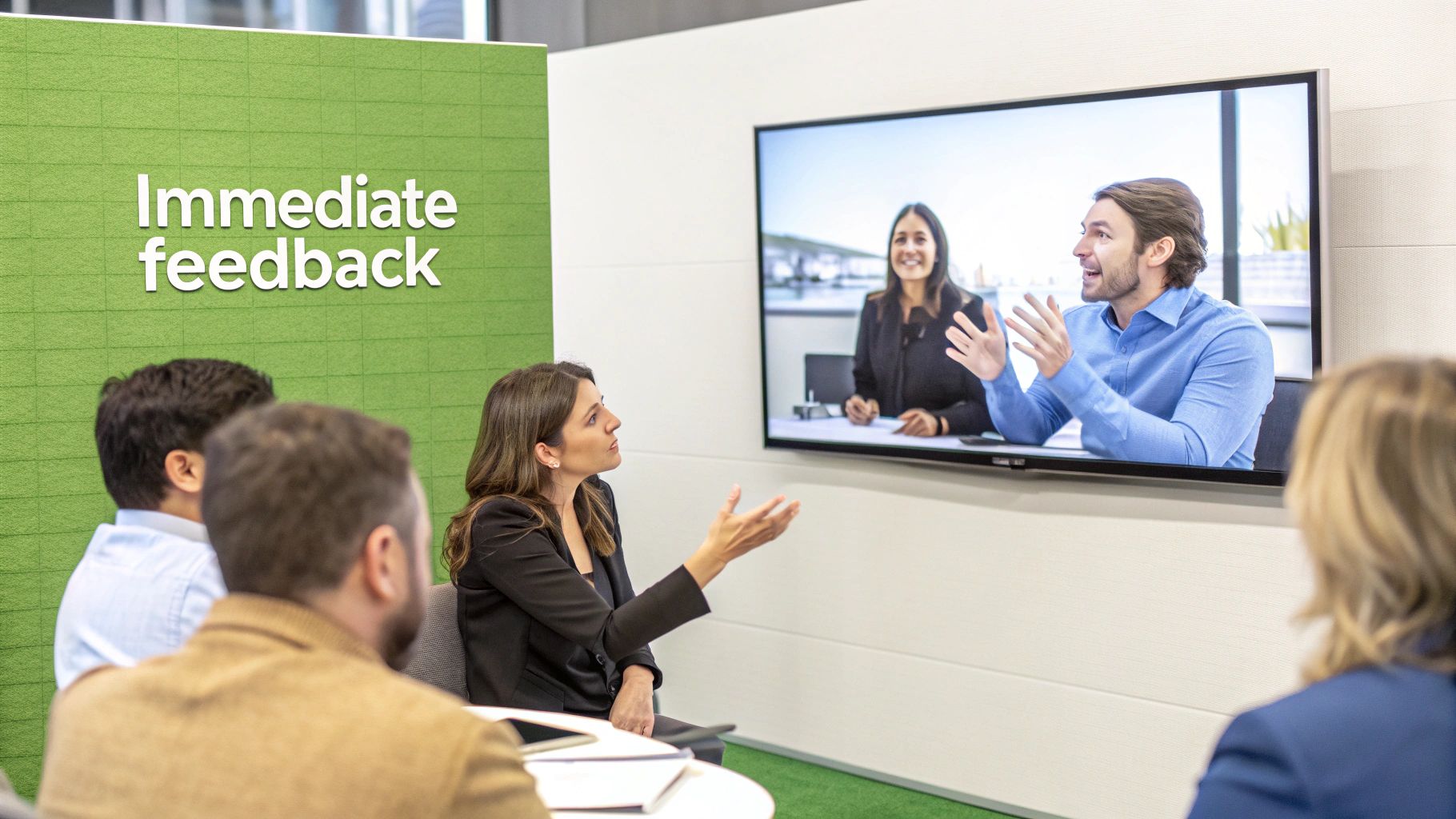
There’s a certain energy that comes from real-time connection. It’s not just about conversation; it's about building momentum and a shared understanding, right there in the moment. Synchronous communication thrives on this immediacy, creating a dynamic space where ideas flow and decisions get made on the spot. It’s the conversational glue holding teams together, especially when things get complex or urgent.
The real magic of synchronous methods is the instant feedback loop. When a development team gets on a video call to troubleshoot a bug, they can share screens, test solutions, and get immediate confirmation, solving in minutes what might take hours over email. It’s a kind of spontaneity that’s almost impossible to replicate with delays between messages.
On top of that, these real-time interactions are loaded with non-verbal cues—tone of voice, facial expressions, and body language—that say so much more than words alone. These subtle signals are vital for building trust, showing empathy, and making sure messages land the way they were intended, which is especially important during sensitive one-on-one chats.
Where Synchronous Communication Excels
Some situations just demand the clarity and speed that only real-time interaction can deliver. Knowing when to schedule a synchronous conversation is key to using its power without disrupting everyone’s day.
Urgent Problem-Solving: When a critical server goes down, a quick video call gets the right engineers together to diagnose the issue and delegate tasks instantly, rather than waiting for email replies.
Complex Project Kick-offs: Launching a new marketing campaign needs everyone on the same page. A live meeting ensures the whole team hears the vision, asks clarifying questions about the brief, and leaves with a unified plan.
Team Building and Cohesion: Shared experiences create connection. A practical action is scheduling a weekly 30-minute "virtual coffee break" where work talk is banned. This helps maintain the social fabric of a team.
Delivering Sensitive Feedback: A performance review, for example, benefits massively from a live discussion. It allows for immediate clarification and a more empathetic exchange, preventing misunderstandings that can arise from text.
Actionable Insight: Before scheduling a meeting, ask yourself: "Could this be a pre-recorded video or a detailed message instead?" By reserving synchronous time for high-stakes moments, you make every meeting more valuable.
The Downsides of an Always-On Culture
For all its benefits, leaning too heavily on synchronous communication can cause some serious problems. The biggest complaint is meeting fatigue, where back-to-back calls drain energy and leave little time for the deep, focused work that actually moves projects forward. This is a well-documented issue; a recent UK workplace survey found that while 61% of knowledge workers prefer real-time communication, a staggering 68% admit they waste time due to ineffective communication strategies.
Scheduling across different time zones is another major headache. A 9 AM meeting in London is a 1 AM call for a colleague in Los Angeles. This creates logistical chaos and an unfair work experience. For businesses looking to scale, it’s also important to understand the tech involved. For instance, knowing what webcasting is and how to use it for live streaming can help you broadcast events to a global audience without forcing everyone into the same virtual room at once.
Finally, the constant pings from instant messages and calls can shatter concentration. While tools like chat widgets for real-time conversations are fantastic for customer-facing roles, internally it’s crucial to set clear boundaries. The pressure to be instantly available stifles creativity and can lead to burnout, turning a tool meant for connection into a source of stress. It’s all about finding the right balance.
Embracing Focused Asynchronous Communication

While real-time interaction has its place, asynchronous communication is the true engine driving today’s most effective teams. It’s a method built on trust, empowering individuals to work when they are most productive, not just when they happen to be online at the same time. This approach actively defends deep, focused work by dismantling the "always-on" culture of constant interruptions.
Instead of demanding instant replies, asynchronous methods give people the breathing room to deliver thoughtful, well-considered responses. For example, when asking for feedback on a new design, a designer can share a link and allow stakeholders a full day to review. This leads to more structured, higher-quality suggestions compared to an on-the-spot reaction in a meeting.
This approach also organically creates a permanent, searchable record of conversations and key decisions. Whether it's a project update in Asana or a decision logged in a shared Notion document, this built-in archive cuts down on repetitive questions and makes getting new team members up to speed a much smoother process.
Promoting Deep Work and Flexibility
One of the greatest gifts of asynchronous work is its ability to protect an individual’s most valuable resource: their focus. By breaking free from a schedule dictated by back-to-back meetings, people can carve out uninterrupted blocks of time for complex, demanding tasks.
Actionable Insight: Encourage your team to block out "focus time" in their calendars and turn off notifications. This normalises uninterrupted work and signals that not every message requires an immediate response.
This flexibility is a game-changer for teams spread across different time zones, but its benefits are just as powerful for teams in the same office. It accommodates different work styles and personal lives, leading to a more inclusive and less stressful environment. Practical examples of this in action include:
Project Management Boards: Using a Trello board to manage a content calendar allows writers, editors, and designers to see task status, deadlines, and dependencies without a single meeting.
Pre-recorded Video Updates: A manager can record a 5-minute weekly update with a tool like Loom, covering key priorities and wins for the team to watch when convenient.
Collaborative Documents: Instead of a live brainstorming session, a team can use a Google Doc to gather ideas over several days. This allows introverted team members to contribute more thoughtfully.
For educators, this same principle can transform student engagement. By exploring different submission formats, institutions can create more flexible and impactful learning experiences. For instance, understanding why video assignment submissions are the future of student assessment shows how asynchronous methods can deepen student learning and offer far richer feedback opportunities.
Addressing the Challenges
Of course, switching to asynchronous communication isn’t a silver bullet. Decision-making can sometimes feel slower without the immediacy of a live discussion, and building a strong team culture requires a more deliberate effort when you lose spontaneous face-to-face interaction.
Overcoming these hurdles requires putting intentional strategies in place. For example, in the UK healthcare sector, adopting asynchronous methods has delivered remarkable results. One study found that using an asynchronous messaging platform cut task completion times by an average of 20.1 minutes. On top of that, 62.5% of staff reported a positive impact on their productivity, and timely communication jumped by 20% after the tool was introduced. You can dive into the full research on communication in clinical settings to learn more.
Actionable Insight: To combat delays, establish clear communication protocols. For example: "For project feedback, expect a response within 48 hours. For anything urgent, tag the project lead in the designated 'Urgent' channel." This creates clarity and manages expectations.
With clear guidelines, any organisation can harness the immense power of focused, asynchronous work while keeping momentum high and its people connected.
Real-World Communication Blends in the UK
Here's how communication styles are really mixed and matched in UK workplaces. It’s less about picking one style over another and more about getting the blend right.
For example, a marketing agency might use a synchronous video call to kick off a new client campaign, capturing the initial excitement and creative energy. Following that, they'll switch to an asynchronous project management tool like Monday.com to track tasks, share drafts, and gather feedback, preserving a clear record of progress and approvals.
Asynchronous is Still the Default
Even with all the real-time tools we have now, asynchronous communication is the foundation of daily work in most UK offices. This usually comes down to needing clear documentation and the flexibility to juggle different people's schedules. It gives employees the breathing room to focus without constant interruptions, while still making sure information gets where it needs to go.
The data backs this up. A recent survey of UK adults showed email is by far the most used asynchronous tool, with 55.45% of workers using it every day. Text messaging isn't far behind at 43.10%. In comparison, real-time methods like phone calls (40.58%) and face-to-face chats (38.27%) are used a bit less frequently. You can dig into more of the numbers in the UK workplace communication survey.
Practical Takeaway: While live interaction is vital for connection, the asynchronous bedrock of email and project management tools provides the reliable, documented backbone for professional life.
Different Industries, Different Rhythms
The right communication mix often comes down to the industry you're in. A fast-moving creative agency, for instance, might thrive on frequent, spontaneous video calls to brainstorm ideas. That immediate back-and-forth is vital for building on concepts and keeping the creative energy high.
Contrast that with a software development team, which often leans towards an asynchronous-first setup. They use tools like Jira to track tasks transparently and leave detailed comments in GitHub for code reviews. This approach respects the need for deep, uninterrupted focus to solve complex problems. Synchronous meetings are saved for critical planning sessions or unblocking major issues.
Making Hybrid Work, Work
The move to hybrid models has pushed UK companies to be much more deliberate about how they communicate. A smart and popular approach is "asynchronous by default, synchronous by design." What this means is that day-to-day updates, status checks, and general questions are all handled asynchronously to cut down on distractions.
Actionable Insight: Implement a "No Meeting Wednesday" policy. This simple rule carves out a dedicated day for deep work, forcing teams to rely on asynchronous methods for updates and encouraging more thoughtful communication.
But then, specific times are set aside for purposeful, real-time interaction. This could be a weekly team huddle to talk through any roadblocks, a monthly one-on-one for career development, or even a virtual coffee break to keep the team spirit alive. It’s a balanced approach that understands the difference between synchronous and asynchronous communication, playing to the strengths of each.
Applying Communication Styles in Training and Development
When it comes to corporate training, understanding the difference between synchronous and asynchronous communication isn't just theory—it's where the magic happens. Choosing the right method has a direct impact on how well your team learns, engages, and holds onto new skills. The goal isn't to rigidly pick one style, but to artfully blend them to create a training experience that’s both robust and flexible.
Synchronous learning, for example, really comes alive when you need immediate interaction. A practical example is a live virtual workshop on new sales techniques. The real-time format allows trainers to run role-playing exercises, give immediate feedback, and use breakout rooms for collaborative practice sessions. This immediacy is a game-changer for skill-based training.
On the other hand, asynchronous learning is the workhorse of any training programme that needs to be scalable and flexible. Picture a series of self-paced video modules for onboarding new software. Employees can watch these tutorials whenever it suits them, hitting rewind on tricky sections.Actionable Insight: To make asynchronous modules more engaging, embed short quizzes after each video to check comprehension and reinforce key learning points.
Crafting a Blended Learning Workflow
The most effective training programmes rarely stick to just one approach. Instead, they create a blended workflow that pulls the best from both worlds, turning a one-off training event into a long-lasting educational asset.
Here’s what that looks like in practice:
The Synchronous Event: It kicks off with a live, interactive webinar on project management principles. This session is built for engagement, with polls on common challenges and breakout rooms to discuss solutions.
Recording and Repurposing: The entire live session is recorded. This simple step is the bridge connecting your synchronous delivery to your asynchronous library.
The Asynchronous Asset: The recording is edited into five smaller chapters (e.g., "Scoping," "Budgeting," "Risk Management") and uploaded to the company’s LMS. Each chapter includes a link to a downloadable template.
This workflow ensures that people who couldn't make the live event don't miss out. Even better, it builds a valuable library of training materials that can be accessed anytime for a quick refresher or to get new hires up to speed.
Optimising Content for Each Format
But just hitting record on a live lecture isn't enough. The content has to be intentionally designed for its intended format. For any educational content, applying solid instructional design best practices is crucial, whether it's delivered live or self-paced. This means you need to structure your material differently for each style.
A live synchronous session should be built around interactive moments to keep people hooked. A practical tip is to plan an interactive element every 10 minutes, such as a poll, a Q&A break, or a short collaborative exercise using a virtual whiteboard.
Actionable Insight: For synchronous sessions, create a detailed facilitator's guide. For asynchronous content, create a learner's guide with a clear checklist of activities. This ensures quality and consistency for both formats.
Conversely, asynchronous video content has to be exceptionally clear and self-contained. With no instructor around for immediate questions, the material needs a logical structure and strong visual aids. A great way to get good at this is to check out a guide to becoming a training video creator, which offers practical tips on scripting and editing for maximum impact. This ensures your material is just as effective when someone watches it weeks later.
Choosing the Right Communication Method
Knowing the difference between synchronous and asynchronous communication is one thing. Actually choosing the right method on the fly? That’s where teams really start to see gains in efficiency. It’s about making a deliberate choice based on what the situation demands, rather than just defaulting to what you're used to.
The trick is to shift from a reactive mindset to a proactive one. Before you hit send or schedule that meeting, just take a moment to pause and ask yourself a few key questions.
A Framework for Smart Choices
To make this easier, here’s a practical framework to help you decide. Thinking through these factors will show you when to go live and when to give people space.
1. How Urgent Is The Message?
Urgency is probably the biggest driver for synchronous communication. If you need an answer right now to get a critical task unstuck, a live conversation is almost always your best bet.
Choose Synchronous: For a time-sensitive crisis, like a system outage or an urgent client issue that needs immediate brainstorming to solve.
Choose Asynchronous: For standard project updates or feedback requests that can wait a few hours. Actionable Insight: Create an "Urgent" tag or channel in your team chat. This trains people to use it only for true emergencies, respecting everyone else's focus time.
2. Does It Require Deep Focus or Collaboration?
The nature of the work itself is a massive clue. Creative brainstorming sessions absolutely thrive on the energy of real-time collaboration, but detailed, analytical work needs quiet, uninterrupted concentration.
Choose Synchronous: Use this for kicking off a new project, workshopping complex ideas, or any session where that back-and-forth flow is the whole point.
Choose Asynchronous: Ideal for tasks that demand deep thought, like writing a detailed report, giving in-depth feedback on a document, or coding.
This decision tree gives you a simple visual for figuring out when live (synchronous) or on-demand (asynchronous) content makes the most sense.
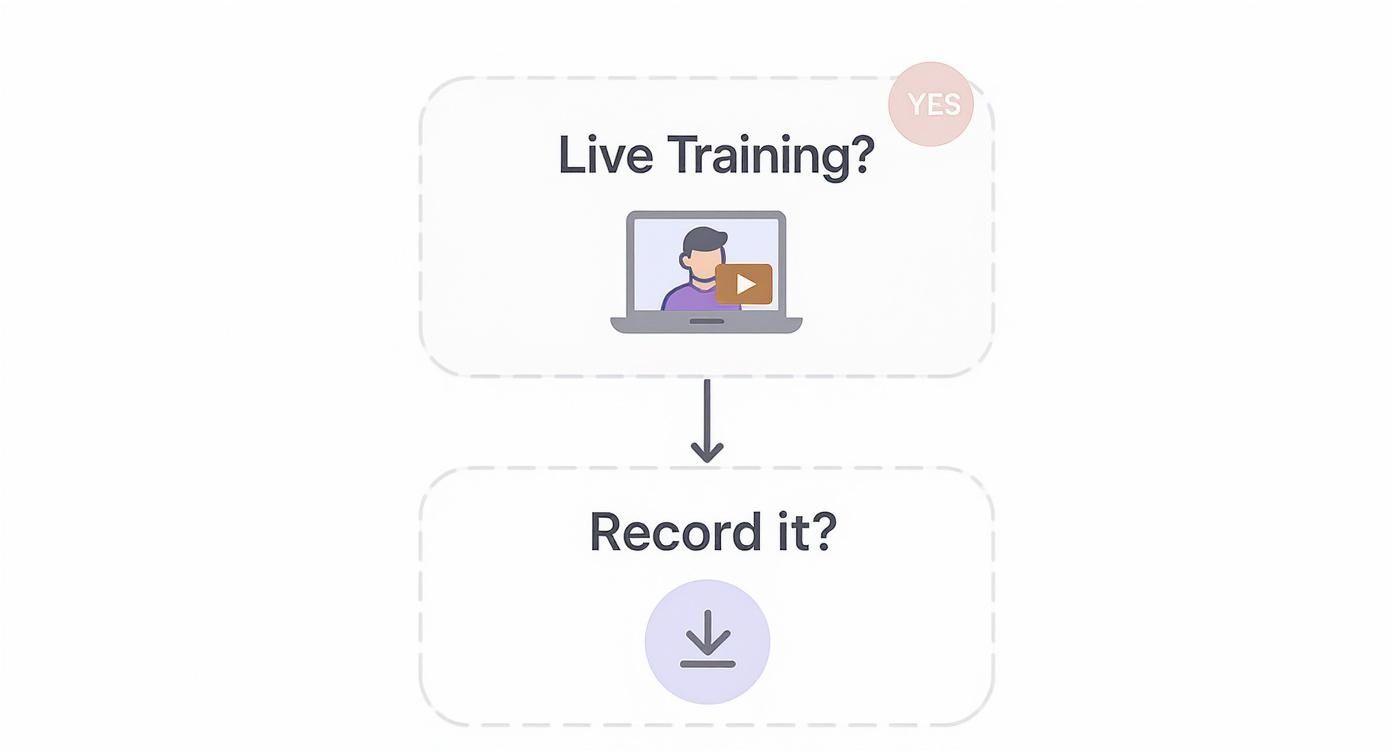
As the infographic shows, live training has its place, but recording it creates a powerful asynchronous asset that you can use again and again.
3. What Is The Emotional Tone?
Never, ever underestimate the emotional side of communication. It's so easy for complex or sensitive topics to get completely misread in a text message, where all the important nuance is stripped away.
Choose Synchronous: Absolutely essential for delivering sensitive feedback, working through interpersonal conflicts, or having important one-on-one career chats. You need to see non-verbal cues.
Choose Asynchronous: Stick to this for straightforward, factual information like sharing meeting notes or confirming the next steps on a project.
Actionable Insight: If an asynchronous exchange (like an email thread) starts to get tense or confusing after two back-and-forths, make it a rule to switch to a quick synchronous call. This simple protocol can prevent major misunderstandings.
This simple, structured approach helps teams sidestep the all-too-common traps of "meeting overload" and "email avalanches," building a culture where every interaction feels purposeful.
Decision-Making Framework When to Use Each Method
To pull it all together, this table offers a practical guide to help you choose the most effective communication method based on specific situational needs and goals.
Situation or Goal | Recommended Method | Rationale and Example |
|---|---|---|
Urgent Problem Solving | Synchronous | Immediate input is needed to unblock a critical issue. Example: A website server is down, and the engineering team jumps on a video call to troubleshoot in real time. |
Complex Brainstorming | Synchronous | The energy and rapid exchange of a live session are needed to generate creative ideas. Example: A marketing team holds a workshop to come up with a new campaign concept. |
Sensitive Conversations | Synchronous | Nuance, tone of voice, and body language are critical to avoid misinterpretation. Example: A manager conducts a performance review with a team member via a one-on-one video call. |
Detailed Feedback | Asynchronous | The reviewer needs time to think deeply and provide thoughtful, structured comments. Example: A course designer sends a draft module to a colleague for review via a shared document with comments. |
Routine Status Updates | Asynchronous | The information is important but doesn't require an immediate response or discussion. Example: A project manager posts a weekly progress summary in a shared team channel. |
Building Team Culture | Both | Spontaneous live chats build rapport, while thoughtful asynchronous posts can foster connection across time zones. Example: A team has a virtual coffee chat (synchronous) and also maintains a "fun stuff" channel for sharing photos and stories (asynchronous). |
Ultimately, there isn't a single "best" method. The goal is to be intentional. By using this framework, you can make smarter choices that respect everyone's time, enhance focus, and lead to better outcomes.
Got Questions? We've Got Answers
Getting your head around synchronous and asynchronous communication is one thing. Putting it into practice effectively is another challenge altogether. Here are a few common questions we see teams grapple with as they refine how they talk to each other.
How Do We Stop Asynchronous Communication from Causing Delays?
The secret sauce here is setting clear expectations. When you don't have the instant back-and-forth of a live chat, everyone needs to be on the same page about response times to keep projects from grinding to a halt.
Actionable Insight: Create a simple Communication Charter for your team. This document should outline expected response times for different channels (e.g., email: within 24 hours; team chat: within 4 hours; urgent channel: within 1 hour). This eliminates guesswork and keeps work flowing smoothly.
Can We Actually Build a Good Team Culture Asynchronously?
You absolutely can, but it takes a bit more conscious effort. Those spontaneous 'water cooler' chats don't just happen when everyone's working on their own schedule, so you have to create deliberate moments for connection.
Building a remote culture isn't about trying to copy-paste office interactions online. It’s about creating new, intentional rituals that build connection and trust, no matter when or where people are working.
Here are a few ideas you can put into action:
Dedicated Social Channels: Set up a channel for "Pets of the Company" or "Weekend Wins." This creates space for personal connection.
Virtual Team Events: Organise optional, synchronous social gatherings like virtual coffee breaks or online game sessions. The key is making them optional so there's no pressure.
Peer-to-Peer Recognition: Use a tool or a dedicated channel where team members can give public "shout-outs" to colleagues who have helped them. This builds a culture of appreciation.
Are There Times We Should Always Choose Synchronous?
While an "asynchronous-first" mindset is brilliant for focused, deep work, some situations just need the clarity of a live conversation. You should always, always opt for a synchronous call when dealing with emotionally charged or complex interpersonal topics.
Things like giving constructive feedback, working through a team conflict, or discussing someone's career path should never be handled over email or chat. These conversations are so dependent on non-verbal cues—like tone of voice and body language—to make sure the message lands with empathy and understanding, and to avoid any chance of misinterpretation.
Ready to build a seamless blended learning environment that nails both synchronous and asynchronous communication? MEDIAL plugs directly into your LMS, making it incredibly easy to record, manage, and share video content. Find out how you can boost engagement and flexibility for your learners by visiting MEDIAL for a free trial or a personalised demo.
Comments